
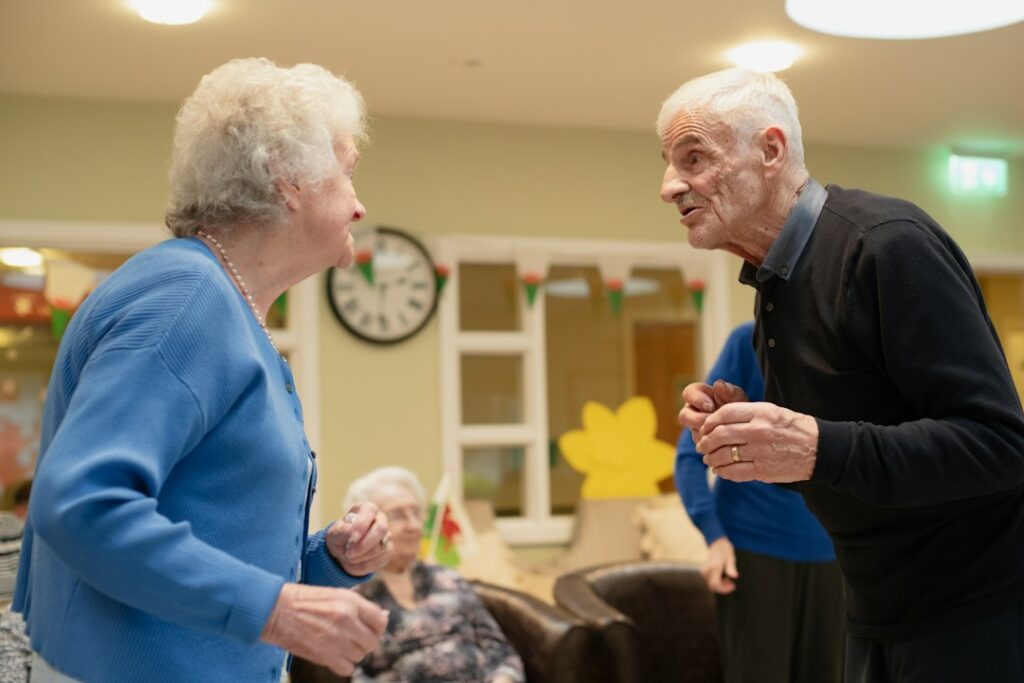
Family involvement in assisted living is more than visiting a loved one. Events, activities, meals, educational programs, and seasonal gatherings can help relatives understand daily life, strengthen relationships, and notice changes that may otherwise be easy to miss.
For families in Lansford, PA, participation may also require planning around winter weather, transportation, work schedules, and the practical realities of living in a close-knit community. A thoughtful approach makes events more comfortable and meaningful for everyone.
What does it mean to engage with assisted living events?
Engagement means taking part in community life in a way that supports the resident’s interests, comfort, and independence. It may include attending a family dinner, joining a holiday activity, participating in a music program, or simply sitting with a loved one during a group gathering.
Family members do not need to attend every event. Consistent, appropriate participation is usually more helpful than trying to be present for everything.
Useful forms of involvement include:
- Attending events the resident already enjoys
- Asking about upcoming activities before visiting
- Bringing photographs, recipes, stories, or familiar music
- Joining a craft, game, exercise, or discussion when invited
- Helping the resident prepare for an event
- Taking time afterward to ask how the experience felt
The resident’s preferences should guide participation. Some people enjoy large gatherings, while others prefer quieter activities or brief visits before returning to their room.
How can a family member choose the right events?
The best event is usually one that matches the resident’s interests, energy level, and comfort with groups. A calendar may include many options, but not every activity will be suitable for every person.
Before attending, consider:
- Does the resident enjoy social events or prefer one-on-one time?
- Is the activity likely to be noisy, crowded, or physically demanding?
- Will the event take place indoors or outdoors?
- Does the resident tire easily or need rest periods?
- Are there sensory concerns involving lighting, sound, or movement?
- Does the timing interfere with meals, medication routines, or sleep?
A relative might choose a small baking activity for someone who dislikes large gatherings or attend a music program with a resident who enjoys familiar songs. For a person with memory loss, a predictable event with a simple structure may be more comfortable than a busy celebration with many unfamiliar faces.
It is also reasonable to ask staff which activities the resident has shown interest in recently. Preferences can change after illness, a move, medication changes, or a shift in mobility.
Should family members participate or simply observe?
Either approach can be appropriate. Some residents appreciate having a relative join the activity, while others feel watched or pressured when family members become too involved.
A good starting point is to ask the resident directly: “Would you like me to join you, or would you rather I sit nearby?” This gives the person control and avoids assuming that assistance is needed.
During an event, family members can:
- Follow the resident’s pace
- Offer help without taking over
- Allow the resident to answer questions independently
- Avoid correcting minor mistakes in front of others
- Step away if the resident becomes tired or uncomfortable
- Include nearby residents in conversation without excluding the family member
Participation should support dignity. For example, if a resident is completing a craft, the family member can provide materials or encouragement instead of doing the project for them.
How can relatives prepare for a successful visit?
Preparation reduces stress for both the visitor and the resident. Check the event time, expected length, dress requirements, and whether visitors need to sign in. Ask whether food will be served and whether the resident has dietary restrictions.
In colder months, travel conditions and building entrances may require extra planning. Snow, ice, early sunsets, and changing temperatures can affect transportation and walking safety. Allow additional time rather than arriving hurried or frustrated.
It may help to bring:
- Glasses, hearing aids, or other commonly forgotten personal items
- A sweater or light layer for temperature changes
- Printed photographs or a familiar object
- A notebook for questions that can be discussed later
- Comfortable shoes for standing or walking
- A small activity that matches the resident’s abilities
Avoid bringing food without checking first. Some residents have swallowing concerns, allergies, diabetes, or dietary instructions that visitors may not know about.
What questions should family members ask during an event?
Events offer a natural opportunity to learn about the resident’s daily experience without turning the visit into an interview. Open-ended questions are generally more useful than questions that require only a yes or no answer.
Examples include:
- “What part of this activity do you like?”
- “Have you done something like this before?”
- “Who usually sits with you during this event?”
- “Would you like to come back for the next one?”
- “Was anything uncomfortable or confusing?”
- “Is there another activity you would rather try?”

Family members may also have questions about routines, mobility, communication, or participation. If the issue is private or requires detailed discussion, it is better to speak with staff separately rather than raise it in front of the resident or other attendees.
How should families respond if the resident refuses to attend?
Refusing an event does not necessarily mean the resident is unhappy. The person may be tired, anxious, in pain, overwhelmed by noise, or simply uninterested in that particular activity.
Pressuring the resident can make future participation more difficult. Instead, acknowledge the preference and offer a smaller alternative, such as a short visit, a quiet conversation, or listening to music together.
If refusal is sudden, frequent, or accompanied by confusion, withdrawal, agitation, or physical changes, family members should share those observations with appropriate care staff. A change in participation can sometimes signal an unmet need, illness, medication effect, depression, or difficulty with the environment.
How can families support residents who have memory loss?
Familiarity and simplicity are often helpful. Use the resident’s preferred name, introduce yourself calmly if needed, and avoid testing memory with questions such as “Do you remember who I am?”
During group activities:
- Offer one idea or direction at a time
- Use visual cues and familiar objects
- Avoid correcting every inaccurate statement
- Focus on the resident’s feelings rather than factual accuracy
- Watch for signs of fatigue or overstimulation
- Leave quietly if the person becomes distressed
A family member can also help preserve personal history by sharing favorite songs, holiday traditions, photographs, or stories with staff when appropriate. These details may help activities feel more familiar and personalized.
What if family schedules make regular attendance difficult?
Regular attendance is helpful, but physical presence is not the only form of involvement. Families with demanding work schedules, long travel times, or winter transportation concerns can remain connected in other ways.
Alternatives may include:
- Joining a planned video call if the resident is comfortable with technology
- Sending a handwritten note or seasonal card
- Providing photographs for a room or activity
- Asking staff to share general information about upcoming events
- Coordinating visits among relatives
- Attending occasional milestone events rather than every activity
Reliability matters more than frequency. A shorter visit that happens as promised may be more reassuring than an uncertain plan for a longer visit.
How can family members give useful feedback?
Feedback is most effective when it is specific, respectful, and focused on the resident’s experience. Rather than saying that an event was “not good,” explain what was observed: the room was too noisy, the resident seemed confused by the instructions, or the activity ended before the person had a chance to participate.
Families can also share what worked well. Staff may benefit from knowing that a certain song helped the resident engage, that a smaller table felt more comfortable, or that the resident preferred observing before joining.
The goal is not to manage every activity. It is to help create conditions in which residents can participate safely, comfortably, and according to their own preferences.
