
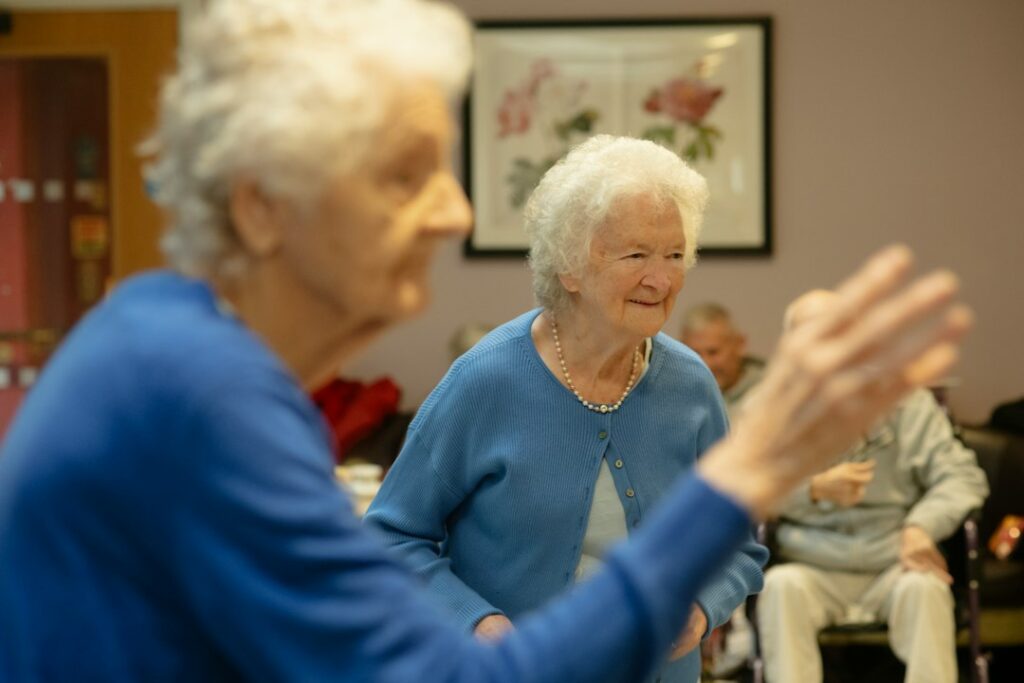
Integrative therapies are supportive approaches used alongside regular medical care, rehabilitation, and daily assistance. In an assisted living community, they may help residents manage stress, remain active, express emotions, sleep more comfortably, or stay connected to familiar routines.
These therapies are not intended to replace prescribed treatment. Their role is to support the whole person—physical health, mood, comfort, relationships, interests, and sense of independence.
What are integrative therapies?
Integrative therapies combine conventional health care with carefully selected complementary practices. The approach is centered on the resident’s goals, health conditions, preferences, and safety needs.
Examples may include:
- Music, art, or reminiscence activities
- Gentle exercise, stretching, tai chi, or chair yoga
- Breathing exercises, meditation, or guided relaxation
- Massage or other forms of comfort-focused touch
- Pet or animal-assisted activities
- Acupuncture, when clinically appropriate and provided by a qualified practitioner
- Aromatherapy or other sensory-based activities
- Gardening, nature activities, and time outdoors
- Spiritual care, prayer, or reflective practices chosen by the resident
The word “integrative” does not mean that every therapy is suitable for every resident. A practice should be considered based on the individual’s diagnoses, medications, mobility, cognition, communication abilities, and personal wishes.
How can these therapies help older adults?
The potential benefits depend on the activity and the resident. Integrative approaches may support relaxation, movement, social connection, pain coping, or emotional expression.
For example, a resident with arthritis may benefit from gentle range-of-motion exercises, warm hand activities, or relaxation techniques. Someone living with memory loss may respond well to familiar music, photographs, hand massage, or a simple gardening task. A resident who feels isolated may gain more from a small music group or guided art session than from a solitary relaxation exercise.
These approaches may also help staff understand what brings comfort to a resident who has difficulty describing pain, anxiety, or sadness. A change in participation, facial expression, sleep, or appetite can provide useful information, although it should not be treated as a medical diagnosis.
Integrative activities can support quality of life, but they do not reliably cure serious illness. Mindfulness, music, massage, or aromatherapy should not be presented as replacements for treatment of depression, infection, heart disease, diabetes, dementia, or other medical conditions.
Which therapies are commonly used in assisted living?
Music and reminiscence
Music can encourage movement, conversation, relaxation, and memory recall. Familiar songs may be especially meaningful for residents with dementia, although loud or unfamiliar music can be upsetting for some people.
A useful activity might involve singing, listening to a resident’s preferred music, playing simple instruments, or discussing memories connected with certain songs. Participation should be voluntary, and hearing aids or other communication needs should be considered.
Gentle movement
Chair exercises, balance activities, stretching, walking, tai chi, and modified yoga may help residents maintain flexibility and confidence. These activities can be adapted for people who use walkers, wheelchairs, or other mobility equipment.
The setting matters. In Lansford, PA, winter weather, ice, and uneven outdoor surfaces can make indoor movement options particularly useful during colder months. Exercise areas should have clear walkways, stable chairs, appropriate lighting, and staff awareness of fall risks.
Massage and comfort-focused touch
Gentle massage may help some residents relax or ease muscle tension. It should be adapted for fragile skin, arthritis, neuropathy, swelling, bruising, recent surgery, or circulation problems.
Touch is personal. A resident should give clear permission, understand what will happen, and be able to stop the activity at any time. Hand lotion, warm towels, or hand-holding may be more comfortable than a formal massage for some individuals.
Art, crafts, and sensory activities
Painting, drawing, knitting, seasonal crafts, clay, textured materials, and simple household projects can support creativity and hand use. These activities can be adjusted for limited vision, tremors, weakness, or cognitive changes.
Success should not depend on producing a finished object. Sorting colors, folding fabric, arranging flowers, or choosing materials may provide meaningful engagement without creating pressure.
Relaxation and breathing exercises

Slow breathing, guided imagery, prayer, meditation, and progressive muscle relaxation may help reduce tension. Sessions should be brief and explained in plain language.
Some people become uncomfortable when asked to close their eyes or focus inward. A resident may prefer quiet music, looking at a familiar object, sitting near a window, or following a simple breathing rhythm instead.
Are herbal supplements and essential oils safe?
Not automatically. Herbal products and dietary supplements can interact with prescription medicines, affect blood pressure or blood sugar, increase bleeding risk, or cause allergic reactions. Their ingredients and strengths may also vary.
Essential oils can irritate skin or airways and may be unsafe if swallowed. Strong scents can be distressing for residents with asthma, migraines, nausea, dementia, or respiratory sensitivity.
Any supplement, herb, essential oil, or topical product should be disclosed to the resident’s medical team and assisted living staff before use. A product described as “natural” is not necessarily harmless, and it should not be added to a resident’s routine without appropriate review.
How should an assisted living community evaluate a therapy?
A responsible program should be based on the resident’s care plan rather than on a general trend. Important questions include:
- What is the resident hoping to improve—comfort, sleep, movement, mood, social connection, or enjoyment?
- Could the activity worsen pain, dizziness, confusion, shortness of breath, or fall risk?
- Does it conflict with medications, diet restrictions, skin conditions, or medical devices?
- Who is leading the activity, and what training or credentials are required?
- Can the resident communicate consent and stop the activity?
- How will changes or adverse effects be documented?
- Is the activity accessible for residents with hearing, vision, speech, or memory differences?
A therapy should be stopped or reconsidered if it causes distress, pain, unusual sleepiness, skin changes, breathing problems, dizziness, or a sudden change in behavior.
What questions should residents and families ask?
Before agreeing to an integrative activity, residents or family members can ask:
1. What is the purpose of this therapy?
2. Is it optional?
3. Who will provide or supervise it?
4. Are there risks related to the resident’s health conditions or medications?
5. What happens if the resident refuses or changes their mind?
6. How will the community know whether it is helping?
7. Are additional costs involved, and if so, what exactly do they cover?
Residents have the right to understand care choices and participate in decisions about their routines and treatment. Preferences should be respected even when a family member believes a particular therapy would be helpful.
Integrative therapies work best when they are modest, individualized, and connected to ordinary life. A familiar song, a safe walk indoors, a quiet conversation, or time spent tending a small plant may provide more value than a complicated program. The most useful approach is the one that fits the resident’s health needs, personal history, comfort, and own definition of a good day.
